My Shadowban Nightmare in CoD: How to Check & Fix It Fast!
A Call of Duty shadowban in Warzone 2 traps legitimate players in cheater lobbies with ping spikes after mass reports.
OMG, you guys won’t believe what happened to me last week. I was deep into a sweaty Warzone 2 match, clutching a 1v3, and then—BAM!—suddenly disconnected from the server. No warning, no error code, just poof. I thought my internet had a meltdown, but after endless router restarts and a speed test that screamed “you’re good,” I realized something darker was going on. Yep, I got shadowbanned. In 2026, even with all the fancy Ricochet upgrades and Activision’s promises, this sneaky little punishment still creeps up on innocent players like yours truly. So grab a snack, get cozy, and let me spill all the tea on Call of Duty shadowbans—how to spot them, check them, and what to do when you’re unfairly tossed into the cheater lobby of doom.
What Even Is a Shadowban? (Asking for a Friend)
Alright, let’s break it down like we’re explaining to a squadmate who just downloaded the game. A shadowban in Warzone 2 and Modern Warfare 2 is basically the game’s way of putting you in a timeout corner. It’s a temporary account limitation that sneaks up on you when you least expect it. The system isolates your account from the regular, law-abiding player base and dumps you into lobbies full of actual cheaters or other suspected naughty accounts. Think of it as being forced to sit at the “table of shame” until the anti-cheat overlords finish reviewing your case.
This whole charade is designed to keep the community safe. If enough people report you—whether through mass reports (those rage-fueled spam clicks after you outplayed someone) or malicious reporting—the Ricochet system slaps a probation tag on you. The problem? Mass and rage reports are still a huge headache in 2026, and a lot of times, the real villains aren’t the ones getting punished. It’s us, the legit players who can’t find a match for hours.
How I Knew I’d Been Shadowbanned (Spoiler: It Was a Mess)
At first, I was in denial. Maybe the servers were just acting up, right? But then the symptoms started piling up. I felt like my account had caught a weird digital cold. Here are the telltale signs that you’ve been shadowbanned, based on my personal rollercoaster:
-
Matchmaking from Hell: I couldn’t find a single lobby. After ten minutes of staring at that spinning search icon, I’d get thrown into a lobby with the same sweaty, obvious hacker names over and over. Repetitive lobbies? Check.
-
Ping That Made Me Cry: My internet is solid, usually rocking a 30ms ping. But suddenly I was spiking to 200ms, 300ms, even 999ms. It felt like I was playing on a potato. Ping inflation is a huge red flag.
-
That Brutal Mid-Game Kick: Remember that disconnect I mentioned? Yeah, getting booted mid-match without explanation is a classic shadowban hello. The server just… drops you, like your presence is suddenly offensive.
-
The Same Suspects Every Time: Over and over, I’d run into the exact same players, and let me tell you, they were not friendly. It was like being stuck in Groundhog Day, but everyone has aimbot.
The Official Check: Your Best Friend Right Now
If you’re nodding along to those symptoms and feeling a little sick, it’s time to confirm your status officially. Don’t rely on the in-game guesswork. Head straight to Activision’s Ban Appeal website. This is the only place where you’ll get a clear (though vague) answer. Before you go, grab your login details and maybe a stress ball.
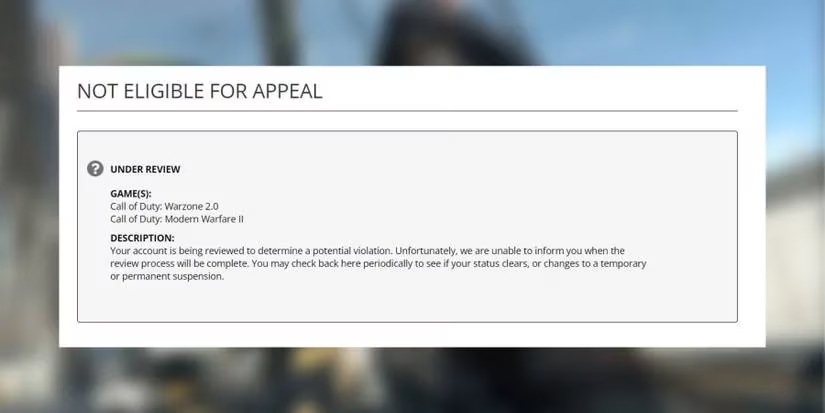
Once you’re in, the site will show your account status. If you see “Under Review” or any phrasing hinting that your account is being investigated, congratulations—you’re shadowbanned. Just a quick heads-up: the site won’t use the word “shadowban.” It’ll dress it up as “your account is under review,” but we all know what that means. You won’t be able to submit an appeal while that review is active, so resist the urge to spam the button. All you can do is stare at those words and wait.
The Waiting Game (and What to Do Next)
Now comes the mentally draining part: waiting. A temporary shadowban can last anywhere from 48 hours to two whole weeks. I know, it feels like an eternity. Doing anything during this window is pretty pointless—you can’t speed it up or yell at customer support to fix it faster. Trust me, I tried.
Here’s my hard-earned survival guide:
-
Step Away from the Game: I used those hours to catch up on other titles, touch some grass, or finally fix my sleep schedule. Obsessively refreshing the app will only drive you nuts.
-
Wait for the Review to End: Once the “Under Review” tag disappears, you can finally submit an appeal if you believe the ban was unjust. Go to the same Ban Appeal page, and you’ll see an option to challenge the decision.
-
Submit an Appeal (With Realistic Expectations) : Firing off a calm, detailed appeal can increase the chances of a thorough reassessment. But I won’t sugarcoat it—it doesn’t guarantee an instant unban. Many unfair bans do lift automatically after a few hours, especially if you were caught in a report spam wave. In those cases, the best move is to log out for an afternoon and try again.
If nothing changes after two weeks and your appeals are ignored, you might need to weigh whether creating a new account is worth the pain. But let’s hope it never comes to that.
Activision’s New Playbook: Should We Have Hope?
Back before Season 5 of Warzone 2, Activision promised to crack down on malicious reporters. The idea was that players who abuse the reporting system would themselves get shadowbanned or even perma-banned. In 2026, we’ve seen some improvements. The Ricochet anti-cheat has grown smarter, and I’ve noticed fewer false positives—but they’re not gone. I’ve still stumbled across friends and streamers yanked into the void because a salty squad decided to mass report them.
For a while, the term “shadowban loop” haunted forums. Legit players would get unbanned, only to be re-banned the moment they dropped 20 kills. Activision’s new approach was supposed to break that cycle. I’ll give credit where it’s due: the reporting system now has some basic sanity checks, like ignoring blatantly fake reports. But as long as human emotions and fragile egos exist in multiplayer lobbies, rage reports will keep happening. The real question is whether the system can truly learn to distinguish between a genuine cheater and someone with really good game sense.
Shadowbans vs. Mitigations: What’s the Difference?
One thing I wish more players understood is the difference between a shadowban and an anti-cheat mitigation. A shadowban is like being put in isolation—you’re stuck until proven innocent. Mitigations, on the other hand, are creative punishments the system inflicts on suspected cheaters while they’re still playing. The most famous example is cloaking: a cheater sees a completely empty map while real players run around invisible to them. It’s a beautiful, chaotic form of justice.
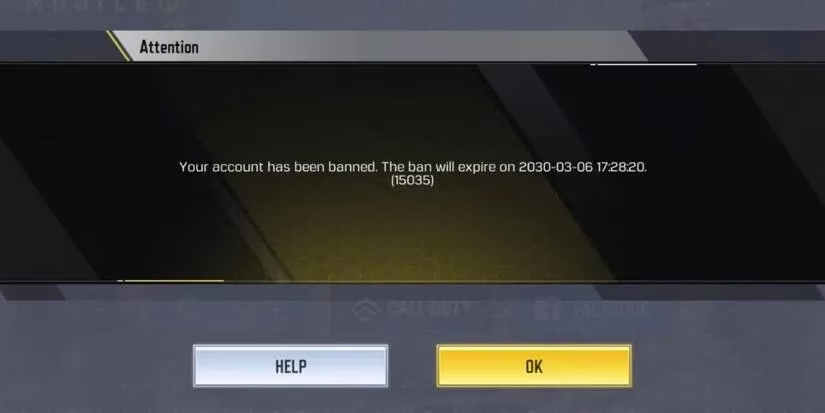
Both are temporary and can lead to a permanent ban if the account is actually guilty. But if you’re a legit player, a shadowban is the one that stings the most because it robs you of your entire experience without warning.
My Final Take (and a Virtual Hug)
Getting shadowbanned feels like being wrongfully accused of a crime you didn’t commit—except the jury is an algorithm and the evidence is rage-filled reports. If you’re reading this while stuck in cheater lobbies, take a deep breath. It’s not permanent, and you’re definitely not alone. Follow the steps above, don’t panic-click anything, and give the system a chance to clear your name.
Call of Duty: Modern Warfare 2 and Warzone 2 are still kicking in 2026 with massive player bases on Xbox, PlayStation, and PC, so the occasional hiccup is inevitable. As the Ricochet team keeps tweaking their systems, I’m cautiously hopeful that fewer innocent players will end up in my shoes. Until then, keep your head high, your reports honest, and maybe don’t drop a 30-bomb too often unless you want a surprise vacation.
Stay frosty out there, and may your lobbies be cheater-free! ✌️